Closing the the 'easy' part of acquiring a property
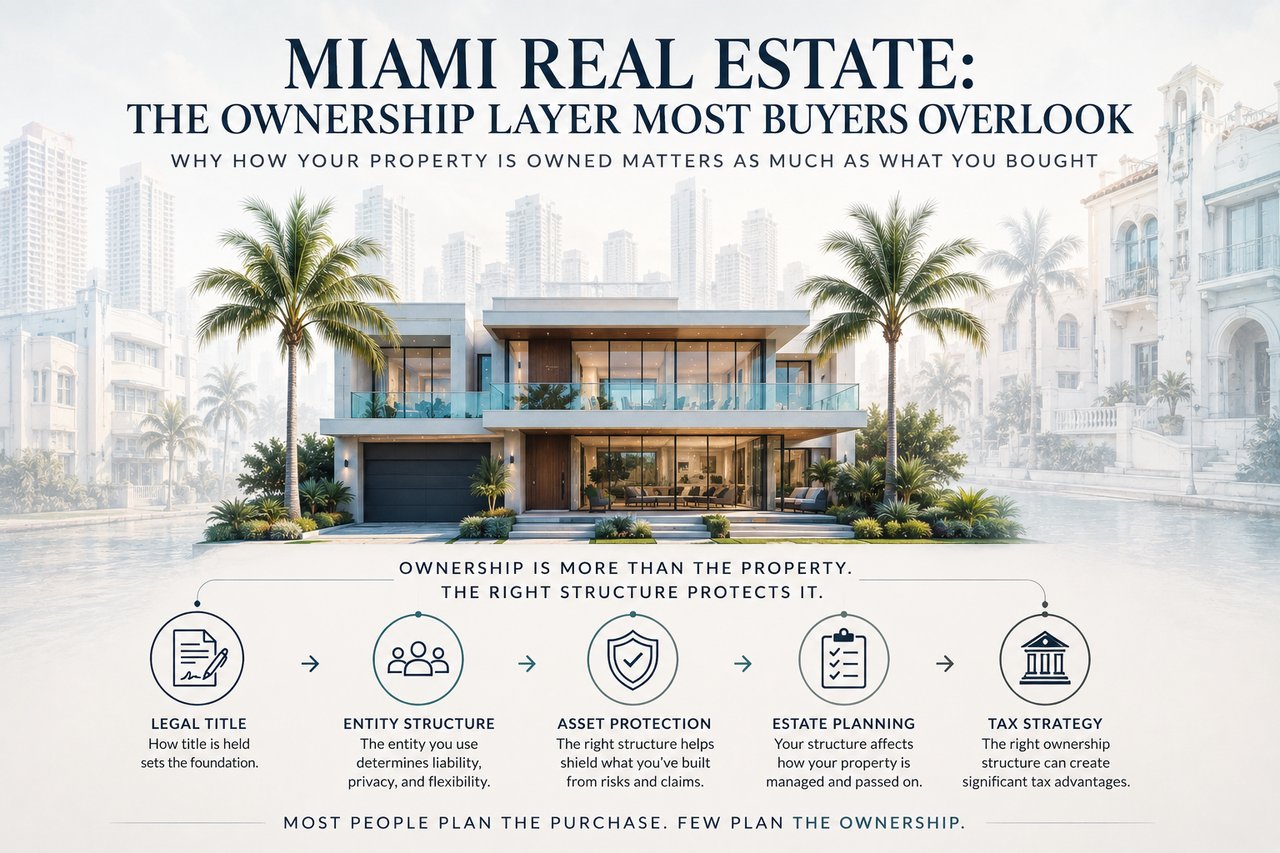
Buying the property and properly structuring ownership are two completely different decisions. There’s a strange psychological shift that happens after closing on a property. Up until that moment, buyers are engaged in a way they rarely are in the rest of their financial lives. They ask questions. They challenge assumptions. They think carefully about timing, debt, inspections, insurance, interest rates, market conditions. Even people who normally operate on instinct suddenly become methodical. Then the transaction closes, and almost overnight, the mindset changes.
The keys are theirs. The property is in their name. The stress of the deal disappears. Mentally, the property moves into a category people no longer examine very closely: done. That shift is usually where the second set of decisions — the ones that shape how protected the ownership actually is over time — quietly gets abandoned. Most buyers spend so much energy getting to the closing table that they rarely stop to think about what comes afterward.
BUYING THE PROPERTY AND STRUCTURING OWNERSHIP ARE NOT THE SAME THING
Ownership feels straightforward because the transaction itself was structured by professionals. There was a lender, title company, underwriting, insurance, escrow, legal paperwork. The process feels comprehensive enough that people naturally assume the important structural decisions have already been made somewhere along the way. In reality, many of the decisions that matter long term are either deferred until later or never discussed in meaningful detail at all.
How should the property actually be titled? Should it remain in a personal name or should it be placed in a trust? Should it transfer automatically if something happens? Would probate become part of the process structured the way it is? Does the ownership structure reflect the reality of the family dynamic — or simply the fastest way to get to closing? Those questions tend to surface after the emotional urgency of the purchase is already gone, which means many owners never revisit them at all. Since nothing immediately appears broken, the assumption becomes that everything is probably fine. Ownership issues rarely reveal themselves early. A poorly negotiated deal usually feels bad immediately. Structural ownership problems tend to sit quietly for years until a death, illness, lawsuit, tax issue, creditor problem, remarriage, inheritance conflict, or family dispute suddenly forces the structure into the open.
OWNERSHIP PROBLEMS HAVE A WAY OF ARRIVING LATER
I learned that personally after my cousin passed away. She left me her condo in her will, and there was nothing vague about her intentions. She had been extraordinarily clear for years that she wanted me to have the property. Once she was gone, however, the emotional clarity of those conversations mattered far less than the legal structure surrounding the property itself. Relatives who had not spoken to her in years — people who openly disliked her and even refused to attend her funeral — suddenly became part of the process once there was property involved that could legally be contested. At a certain point, the emotional and legal exhaustion outweighed the value of the property itself, even though we were talking about several hundred thousand dollars. Rather than spend that stage of my life fighting through a prolonged family dispute in court, I let it go. Her intentions were never unclear. The problem was that intentions and protections are not the same thing.
In Florida, for example, certain structures like a Lady Bird deed may allow a property to transfer outside of probate while still allowing the owner to retain full control during their lifetime. That is not necessarily the right solution in every situation, but it illustrates the larger issue: there are ownership tools that can dramatically reduce confusion, delay, and conflict later on, yet many families never even discuss them while things are calm. That’s the part people misunderstand when they assume ownership planning is only relevant for wealthy families with complicated estates. Sometimes the issue is not the value of the property itself. It’s whether the ownership structure surrounding it was ever intentionally thought through in the first place.
SMALL DECISIONS QUIETLY BECOME LONG-TERM ONES
The same thing happens with issues people dismiss because they sound procedural. Homestead exemptions are a perfect example. Most owners understand them vaguely, but not urgently. Filing for homestead becomes one of those things people plan to handle “once everything settles down,” and then years pass quietly with higher tax exposure than necessary simply because nobody circled back to it. Homestead protections can also affect more than taxes alone. Depending on the situation, they may influence certain creditor protections and long-term ownership stability in ways many owners do not fully appreciate when they first purchase the property. That is what makes ownership responsibilities deceptively easy to ignore. The consequences rarely arrive dramatically. More often, they accumulate slowly through assumptions, delays, incomplete conversations, default structures, or decisions people fully intended to deal with later.
Nothing feels urgent when nothing appears wrong.
PEOPLE OFTEN CONFUSE POSSESSION WITH CONTROL
One of the biggest misconceptions underneath all of this is the assumption that ownership automatically creates clarity. People think that because the property belongs to them, the structure around it must naturally reflect their intentions. Ownership alone does not automatically create clarity around transfer, authority, inheritance, protection, or long-term management. It simply places the property inside a legal and financial framework that will continue operating whether the owner shaped it intentionally or not.
Systems (and people who can take harmful advantage) can be very good at filling in blanks people leave behind. That is why ownership problems often feel surprising when they surface. Many people do not realize they made a decision because the decision itself was passive. It happened through inaction, postponed conversations, default structures, or assumptions that slowly became permanent over time.
THE WINDOW PEOPLE CONSISTENTLY UNDERESTIMATE
There is usually a period immediately after closing when many of these decisions are still relatively easy to address. Conversations are calmer. Costs are lower. Adjustments are simpler. Nothing emotionally catastrophic has happened yet. Owners can think clearly about how the property should actually function long term instead of reacting under pressure later. Most people let that window close without realizing it existed. Ownership responsibilities are not always obvious at first glance, especially when everything still feels stable. These are ownership considerations, not legal instructions.
Every property, family structure, financial situation, and long-term goal is different, which is why conversations with qualified legal, tax, and financial professionals matter. Trusts, Lady Bird deeds, homestead protections, co-ownership structures, and titling strategies are only a few examples of tools that may or may not make sense depending on the individual situation.
A QUICK SELF-CHECK
Before assuming your ownership structure is fully handled, it may be worth asking yourself a few things:
- If something happened tomorrow, would this property transfer the way you actually intend?
- Is the property titled intentionally, or simply the way it needed to be titled to close quickly?
- If the property had to transfer tomorrow, would your family be dealing with a straightforward process or a probate court process?
- Are you certain your homestead exemption is already in place, or are you assuming it was handled automatically?
- Have you ever had a real conversation about whether your property should remain in your personal name, move into a trust, use a Lady Bird deed, or use another ownership structure entirely?
- Is there anyone who could end up with influence over the property that you never actually intended?
- Have you revisited the ownership structure since the day you bought the property?
- Do you fully understand how the property behaves legally under different life circumstances, or are you mostly assuming
If some of those questions feel more important now than they did a few minutes ago, that is exactly the point.
BOTTOM LINE
The closing table creates a very convincing illusion of completion. The transaction is finished, so people naturally assume the important decisions are finished too. Over time, however, the people who benefit most from property ownership are usually not just the people who bought well. They are the people who understood that ownership itself required ongoing intentional decisions long after the purchase was complete. Ownership responsibilities are not always obvious at first glance, especially when nothing appears wrong yet.
If you want to talk through any of it — whether that means ownership structure, homestead questions, probate concerns, or simply understanding resources might be of greatest advantage to you — just give me a call or drop me a line.