The question keeps coming up, almost automatically now: Is Coral Gables overpriced?
Prices are high—often pushing past the $2 million mark—and yet homes aren’t moving with the ease people remember. They sit longer. Deals stall out. It makes people uneasy, like something fundamental has shifted. But expensive and slow doesn’t mean broken.
Because Coral Gables doesn’t drift. It calibrates.
THE STRUCTURE
You can feel the order of the Gables the moment you drive through—its streets, its rhythm, the quiet consistency that can feel either refined or restrictive depending on your lens. What’s less obvious is how that structure continues into pricing. Certain streets outperform. Certain pockets stay steady. Certain types of homes trade in tighter ranges than anywhere else in Miami. That consistency removes the wiggle room most markets rely on: interpretation. In most of Miami, buyers are still deciding what something might be worth. In Coral Gables, they’re recognizing what it is—or rejecting it. And once you see that, the “overpriced” argument starts to collapse.
What people call “overpriced” is usually just misaligned.
THE CALIBRATION
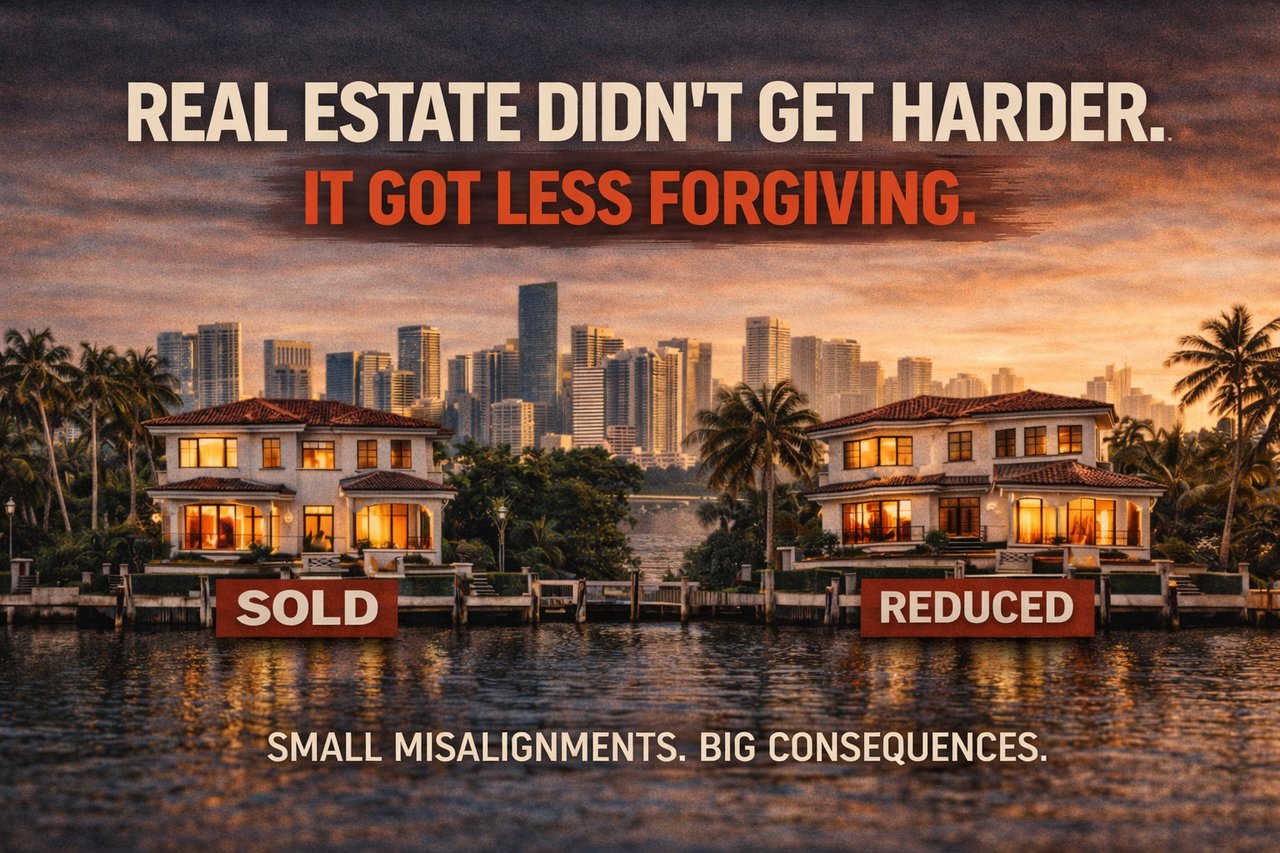
You can see alignment—or the lack of it—in the spread. Homes coming on at $1.6 million and selling near $1.1 million aren’t negotiating; they’re being corrected. The market isn’t stretching for them. It’s pulling them back into place. Meanwhile, the ones that line up—clean condition, right street, pricing that respects recent trades—move almost effortlessly. No spectacle, no fight. Just quiet momentum. That’s the split. Not by neighborhood or zip code. By alignment.
People assume everything in Coral Gables carries equal weight, that the name itself guarantees value. It doesn’t. Not anymore.
AGREEMENT OVER OPINION
In most markets, “fair value” is something people try to calculate or defend—as if it exists independently. But price isn’t real until there’s agreement. And in Coral Gables, that agreement is precise. It’s not discovered gradually or negotiated into place. It happens only when both sides are seeing the same thing, in the same way. When that alignment doesn’t appear, there is no sale—no matter how confident anyone feels about what something should be worth. That’s the real source of the tension. Not that prices are wrong, but that alignment never materializes.
THE DETAILS THAT DON’T GET ABSORBED
The things that trips properties up here aren’t dramatic. A house on the louder end of an otherwise perfect street. A layout that looks fine on paper but doesn’t live well. A renovation that photographs beautifully but falters in person. Each one small, easy to shrug off elsewhere. But in this market, they don’t get absorbed. Precision exposes them.
LIVING INSIDE THE PATTERN
I see this from the inside. I live in Coral Gables. Over fifteen years, I’ve watched prices triple on homes like mine. People look at that and assume the whole area rises as one. It doesn’t:
What’s appreciating isn’t “Gables value” as a whole—it’s specific homes, perfectly aligned with what the market values right now. Demand here isn’t broad. It’s selective. Shift that alignment even slightly—a floor plan, a street, a style—and results change completely. Not dramatically, not in headlines, but enough to matter when you’re selling. That’s what the appreciation charts miss: it looks broad, but it’s built on a thousand precise matches happening one property at a time.
WHY PRECISION FEELS EXPENSIVE
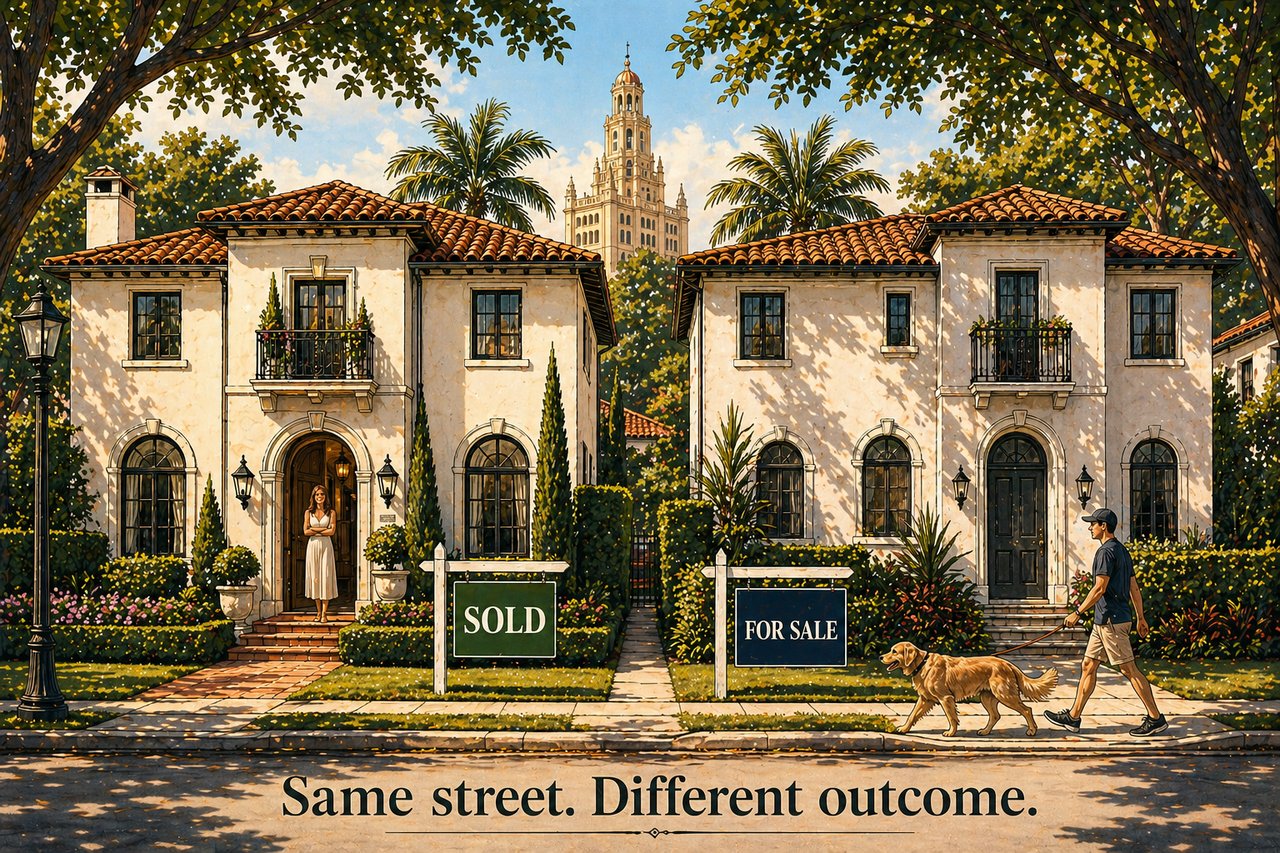
In Coral Gables, value moves from house to house, even door to door. Looking a few blocks away often stops being relevant. What appears similar rarely trades the same. Tiny differences—lot depth, water access, architecture, even what side of the street you’re on—carry disproportionate weight. That kind of compression doesn’t happen in a loose market. It happens in one that’s anchoring with precision. And in a market like that, “almost” simply stops working.The result isn’t inconsistency. It’s selection.
That’s why the Gables feels expensive—not because it’s inflated, but because it’s exacting. Homes aren’t carried by momentum anymore. They’re tested against a very specific threshold of fit. Fail that test, and the market doesn’t bend. It pauses. And then it corrects.
THE REAL QUESTION
The better question isn’t “Is Coral Gables overpriced?” It’s quieter, and less comfortable:
Do I understand exactly where this property sits within the system—and am I aligned with it, or not?
Because in this market, precision isn’t optional. It’s survival.
-DIAGNOSTIC-
If any of these sound familiar, you’re probably misreading the market:
- You’ve looked at nearby sales and assumed your home belongs in that range.
- You’ve said, “It’s the Gables. It will sell.”
- You’ve dismissed a price as “too high” without a near‑identical sale to back it up.
- You’ve treated homes a few blocks apart as equal comps.
- You’ve expected a price to “negotiate down.”
- You’ve seen listings sit and blamed a slow market, not misalignment.
- You’ve awaited “better deals” without defining what “better” means.
- You’ve trusted “close enough” to carry you across the finish line.
If more than one resonates, you’re not describing an overpriced market. You’re seeing Coral Gables as it actually behaves.
THE BOTTOM LINE
Coral Gables doesn’t feel expensive because it’s inflated. It feels expensive because it’s exact. And in a market that exact, homes don’t sell themselves. The market quietly decides—precisely, not generously—whether they’re aligned or not.
If you want to see what real alignment looks like right now, explore what’s currently trading here:
Or if you’re evaluating options, I can show you exactly how each one is positioned—beyond what it appears to be. Because in this market, “similar” isn’t enough.
Only alignment is.